
Letting Go
For Nonprofit Leaders

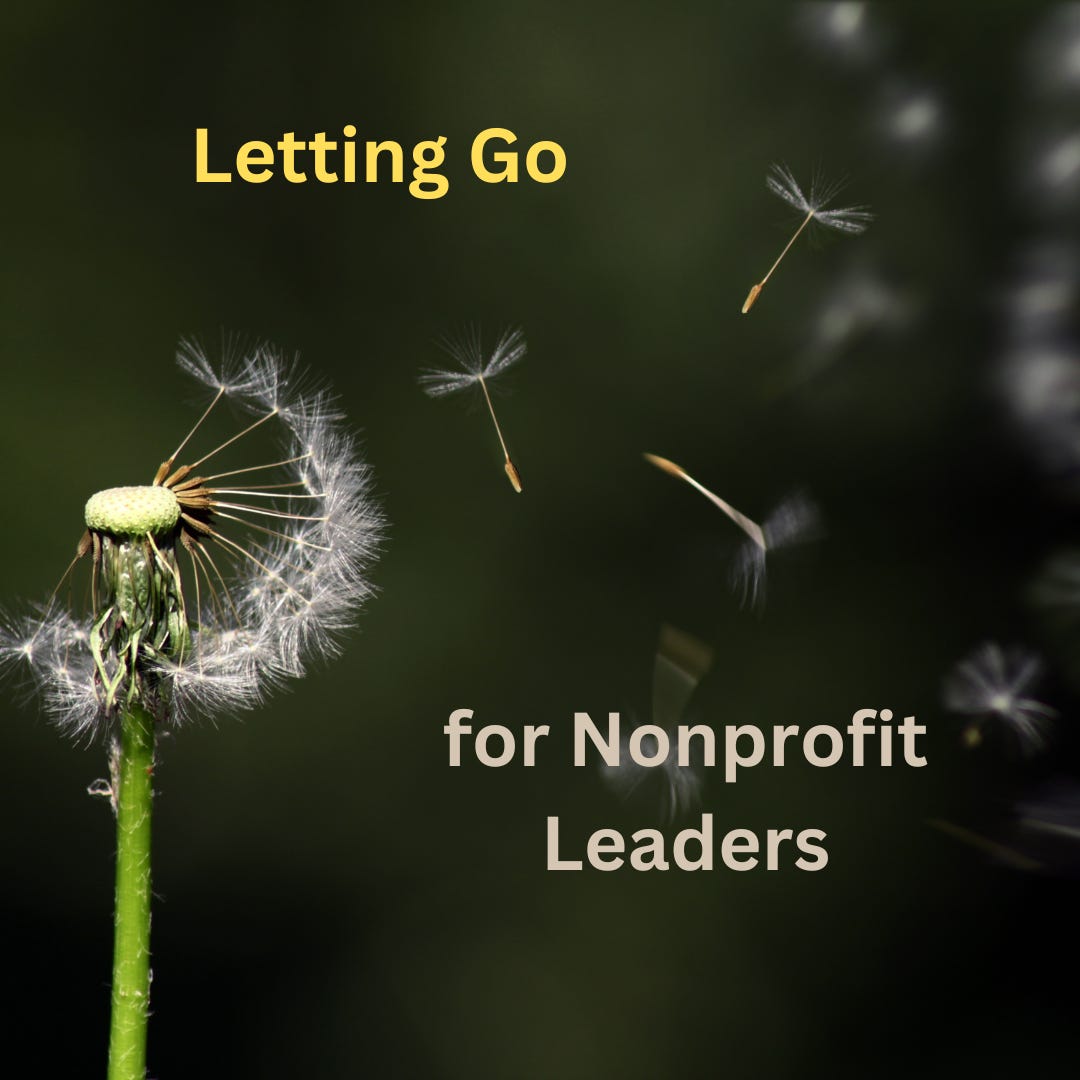
Tying up loose ends is a phrase I’ve heard as far back as I can remember. I am a person who likes to make sure things are in good working order and that stuff doesn’t fall through the cracks. I also have encountered situations where I feel as if I’m in the midst of a tornado with all kinds of items dangerously flailing around me that I am compelled to pin down for the sake of everyone’s wellbeing. Tying up loose ends has made sense to me, but recently I thought of how some kinds of loose ends, like the chunks of marble a sculptor chips away at, warrant being let go of rather than being fastened in place.
These are some of the things I learned to let go of as a nonprofit leader.
Tasks that can be handled by someone else. The responsibilities of an executive director are overwhelming, and the items that interrupt one’s workflow are chronically numerous. One of the best ways to open up the time needed for deep creativity, problem-solving, and long-term planning is to delegate duties to others who have the capacity to handle them well if you give them the opportunity and any necessary coaching. This supports professional development for all involved.
Anything neglected for a while with little to no consequence. For example, my email inbox was overwhelming. I had to prioritize the matters that carried the greatest importance, and plenty of items were relegated to back-burner status. Eventually, I heeded reality, deleted anything that had been sitting in my inbox for too long, and unsubscribed to any lists that I essentially had been ignoring. This occasional purge offered substantial relief.
Outdated materials. I have inherited way too many boxes, file cabinets, and shelves stuffed with various types of paper that no longer serve any purpose other than taking up precious office space. Sure, I have saved a few items that held some historical value for the organization or some sentimental value for me, but keeping only those items that nonprofits are required to retain is quite freeing. Having a simple system for storing and discarding records and materials decreases clutter and improves productivity.
Staff who need to leave the organization. Sometimes a member of the team does not fulfill their job duties despite receiving clear expectations, training, and ongoing support. I consistently wanted to give failing employees every opportunity to succeed, but I had to acknowledge the impact this had on our entire team. A colleague once shared that she had been the same way, eventually recognized the need for a better boundary in these matters, and found that firing non-performing individuals in a more timely manner was the right step to take for individual and organizational health; she was right.
Narrow definitions of leadership and professionalism. I have my own unique blend of strengths to offer nonprofit organizations, and my qualities often do not fit people’s ideas of what a leader is. Likewise, dominant notions of professional behavior tend to discount lived experience, disregard the wisdom of the world’s indigenous peoples, and uphold white supremacist cultural values. I wanted every member of the team, myself included, to be able to be human and to bring our full selves to our work, and that meant expanding our perspective of what constitutes leadership and professionalism. This helped transform our organization to better meet the needs of all communities.
Things you can’t control. Spending mind, heart, or soul energy on past events or what other people think, feel, or do is a waste of time and effort. Plenty of individuals will hold less than stellar opinions of your performance, underestimate your contributions, and disagree with your choices. Focusing on our own thoughts, feelings, decisions, and actions is where we have the power to create change. Maintaining our integrity and ethical behavior in every circumstance is our best bet.
Fear. Applying a sufficient dose of realistic caution to situations is warranted. However, too many people act out of fear, and this creates all kinds of devastation, often bringing about the very things they intended to avoid in the first place. We need to be confident enough to weave both compassion and accountability into our approaches, to learn from and deliver genuine apologies for our mistakes, and to recognize that we have the ability to handle whatever may come.
Many think about letting go as a loss-based activity. However, letting go of some things provides us with the gifts of time, space, acceptance, peace, growth, and new possibilities.
If you have a topic or are facing a challenge you’d like me to write about in an upcoming post, please comment or contact me.
Another very well written piece. I found so much truth in what you say. It is very apparent that you do have valueble experience and knowledge in nonprofit leadership and many years ago, my electronics teacher used to always say. Knowledge is power, a statement I believe to be true .you are handing power to anyone who takes a few minutes to read, for free. Great Job.